
The Future of Software Will Be Built by Non-Engineers

A cardiologist recently built an AI-powered medical documentation app in seven days without writing traditional code. The project later placed among the top entries in an international hackathon hosted by Anthropic.
Not long ago, that would have sounded unrealistic.
Cardiologist wins 3rd place at Anthropic's hackathon. Out of 13,000 applications. Built in 7 days by Michał Nedoszytko MD. Coded day and night - in the hospital, in the cloud, while flying from Brussels to San Francisco.
— Michał Podlewski (@trajektoriePL) February 20, 2026
A few years ago, it would have been impossible for a doctor… pic.twitter.com/nNtf9mnmfH
Building software traditionally required specialized teams, technical planning, infrastructure knowledge, and months of development cycles. If you had an idea but no engineering background, your ability to execute depended almost entirely on whether developers had the time, budget, or interest to build it for you.
That model is beginning to break. The most important shift happening in technology right now is not simply AI-generated code. It is that software creation itself is becoming accessible to people who were previously locked out of it. And the companies that understand this shift early will likely move faster than everyone else.
Software Is Becoming a Universal Skill
For decades, digital products were mostly created by technology companies. Today, nearly every industry operates through software. Restaurants depend on ordering systems. Schools depend on learning platforms. Operations teams depend on dashboards. Communities depend on digital ecosystems.Consultants depend on workflows and automation.
Even small businesses increasingly rely on customer portals, scheduling systems, analytics, AI assistants, and mobile experiences.
Software is no longer a separate layer of business. It is becoming the operating layer of business itself. But while the demand for software expanded everywhere, the ability to build it remained concentrated among technical teams.
That imbalance created friction across industries. The people closest to real-world problems were often the people least equipped to build digital solutions.
The Interface of Building Is Changing
What AI changes is not just development speed. It changes the interface between humans and software creation. Traditional software development required technical abstraction:
- frontend frameworks
- backend systems
- databases
- deployment pipelines
- infrastructure
- APIs
- cloud environments
Most people do not think this way. A fitness coach does not think in system architecture. A recruiter does not think in APIs. A teacher does not think in deployment infrastructure.
They think in workflows, outcomes, and experiences. AI increasingly translates those ideas into working systems. Research around AI-assisted software development and low-code systems shows a growing movement toward enabling domain experts and non-technical users to participate directly in software creation.
This is why the rise of visual AI builders matters so much. The future builder may not write code first.
They may:
- describe workflows conversationally
- visually edit interfaces
- connect tools together
- deploy instantly
- integrate APIs through configuration instead of engineering
That changes who gets to build.
The Rise of the Operational Builder
The next generation of builders may not call themselves developers.
They may be:
- teachers
- operators
- consultants
- marketers
- recruiters
- creators
- founders
- community leaders
People who deeply understand operational pain points. Historically, these people depended on technical intermediaries to transform ideas into products. AI reduces that dependency. The most powerful software ideas have always come from domain expertise, not from syntax. A doctor understands clinical inefficiencies better than most engineers. A logistics operator understands workflow bottlenecks better than most product teams. A restaurant owner understands customer friction better than most designers.
Now those people can increasingly participate directly in creation.
This Is Where MonstarX Comes In
At MonstarX, we believe the future of software development is not about replacing engineers. It is about expanding who can participate in building. That is why the next evolution of MonstarX is centered around AI-native product creation. Not just AI coding. Actual AI-powered software workflows.
The idea is simple: What if someone without an engineering background could still build real digital products? Not mockups. Not static websites. Actual deployable systems.
A Different Kind of Builder Platform
Most AI website builders today stop at templates and marketing pages. The MonstarX is designed around operational software creation.
That includes:
- visual editing
- AI-assisted phased development
- instant deployment
- reusable templates
- API integrations
- custom connectors
- domain management
- AI orchestration
- environment configuration
A user could:
- visually modify interfaces directly
- connect tools without manually writing infrastructure
- bring their own API keys
- integrate AI providers
- build custom workflows
- deploy applications rapidly
- launch under their own domains
Instead of thinking about servers and frameworks, builders focus on outcomes. The system handles much of the underlying complexity. This shift mirrors what happened in design. Platforms like Canva simplified visual creation for millions of non-designers. AI-native development platforms are beginning to do something similar for software creation itself. It becomes collaborative creation between humans and AI systems.
Building Together, Not Just Learning
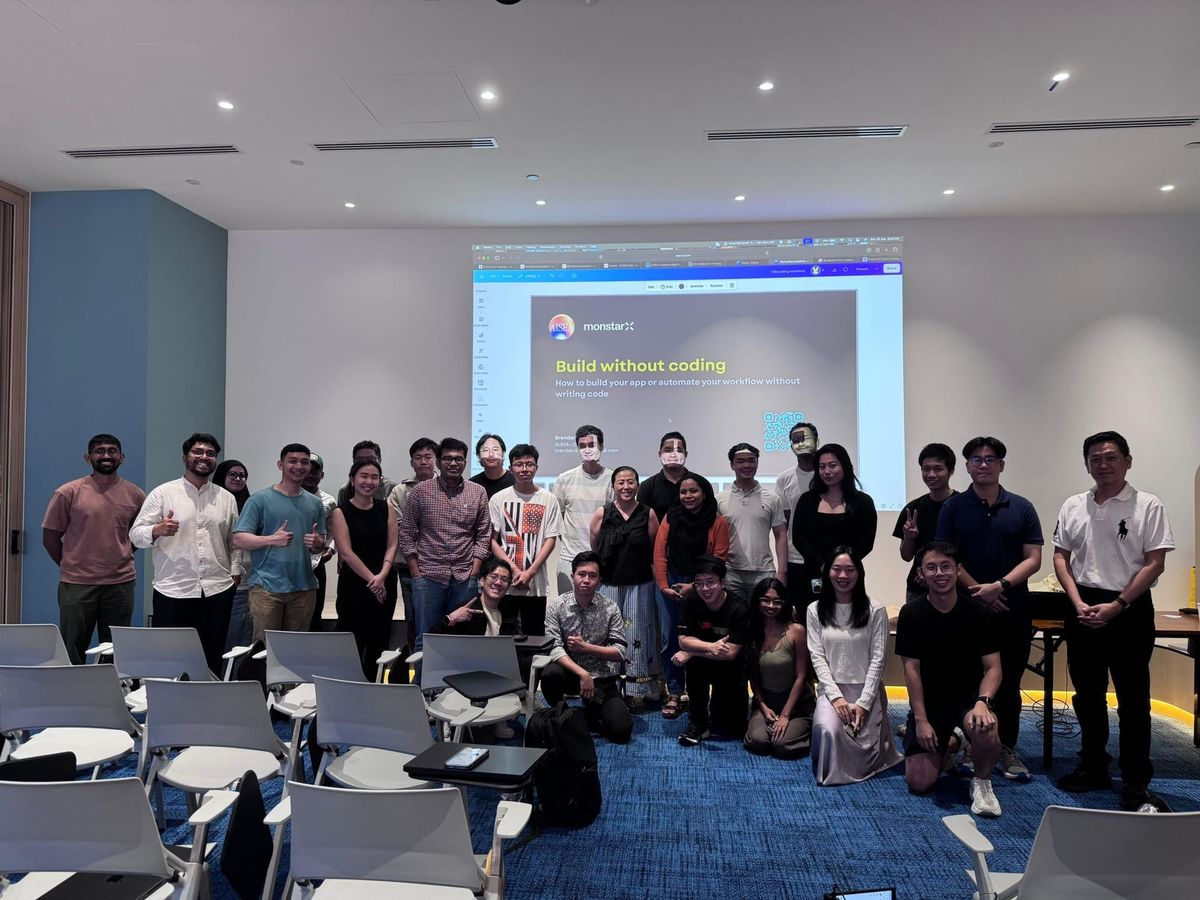
One thing we realized early at MonstarX is that people do not just need tools. They need confidence. That is why we started hosting hands-on community sessions where people build together using AI. Not theoretical workshops. Actual building sessions.
One of our earlier sessions with Kristine Ling brought together participants from different backgrounds to prototype real ideas using AI workflows. The energy in the room was remarkable. People who initially believed software creation was “too technical” started realizing they could actually bring ideas to life themselves.
The session became less about prompts and tools and more about mindset.
People encouraged each other.
Experimented together.
Shared workflows.
Refined ideas collaboratively.
It reminded us that the future of AI is not just about smarter systems. It is about enabling more humans to participate in creation. We are continuing that movement with our upcoming community build session:
Vibe Coding Hands-on Workshop: Zero to One Edition
The idea is simple. You do not just watch demos. You come in, build together, experiment together, and leave with actual progress. Because the future builders of the internet may not be the people with the strongest engineering backgrounds. They may simply be the people willing to start building first. And for the first time in a very long time, they finally can.
N.B. Co-written by AI, based on the lived experience of Saad Bin Amjad.