
6 Best Lovable.dev Alternatives for AI No-Code (2026)

By Kristine Ling · July 21, 2026 · 9 min read
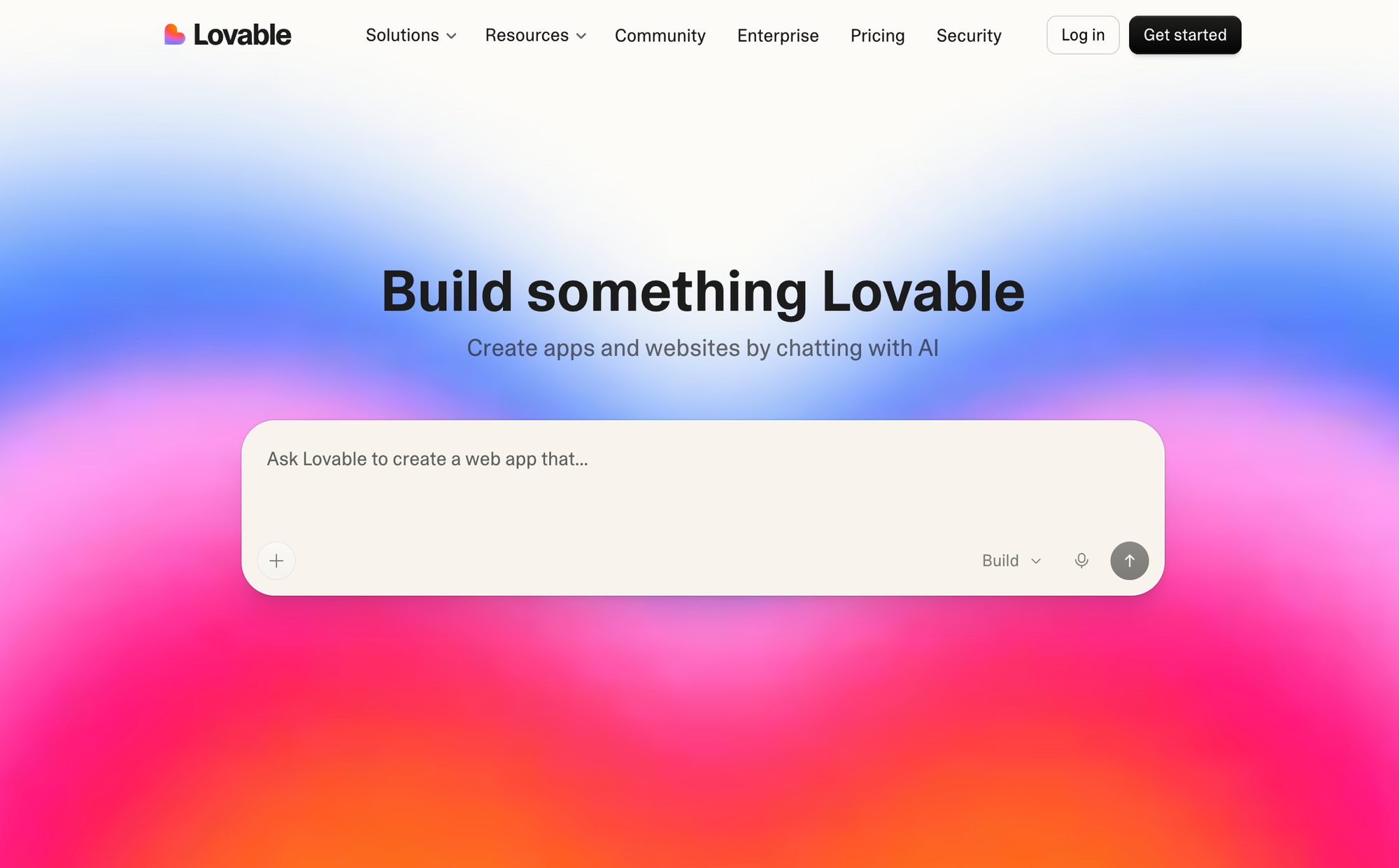
Looking for a Lovable.dev alternative? Lovable is a solid AI no-code web app builder, but it is not the right tool for every situation. Depending on what you are building, the gaps in backend depth, mobile output, and external service integrations can stop a project before it ships.
This guide compares six AI no-code platforms with specific use cases, pricing breakdowns, and feature comparisons to help you choose the right one in 2026.
What Is Lovable.dev?
Lovable (formerly GPT Engineer) is an AI-powered no-code platform that converts text prompts into full-stack web applications. It is designed for:
- Building web apps with AI-generated frontend and Supabase-connected backend
- Exporting projects to GitHub or deploying via Netlify
- Iterating on projects through conversational AI prompts
- Integrating with external APIs and databases
Best for: Web app prototyping, SaaS MVPs, and early-stage validation where getting something clickable in front of stakeholders is the priority.
Limitations:
- Web-only output, no native iOS or Android
- No built-in connectors for external services like Stripe, Twilio, or email providers
- Free tier has restrictive monthly credit limits
- Prompt-first editing becomes unpredictable on larger structural changes
- No scope confirmation or PRD step before building, which means misbuilt foundations are only discovered late
Why Look for Lovable Alternatives?
Lovable is a strong starting point, but it has clear gaps. Here is where it falls short and what to look for instead:
| Reason | What You Need Instead |
|---|---|
| Need native mobile output | A platform that generates iOS and Android alongside the web app |
| Backend beyond Supabase | Auto-generated full-stack with database schema, auth, and API logic |
| External integrations without manual wiring | Built-in connectors for Stripe, Twilio, Resend, AI APIs |
| Edit stability on complex changes | Phased builds with checkpoints instead of a single prompt loop |
| Structural planning before code generation | Scope selector and PRD confirmation before the build begins |
| More generous free access | Daily credit reset rather than a monthly pool you can exhaust quickly |
If any of these apply to your project, the alternatives below are worth a close look.
Top 6 Lovable.dev Alternatives for 2026
1. MonstarX -- Best for Full-Stack Web and Native Mobile
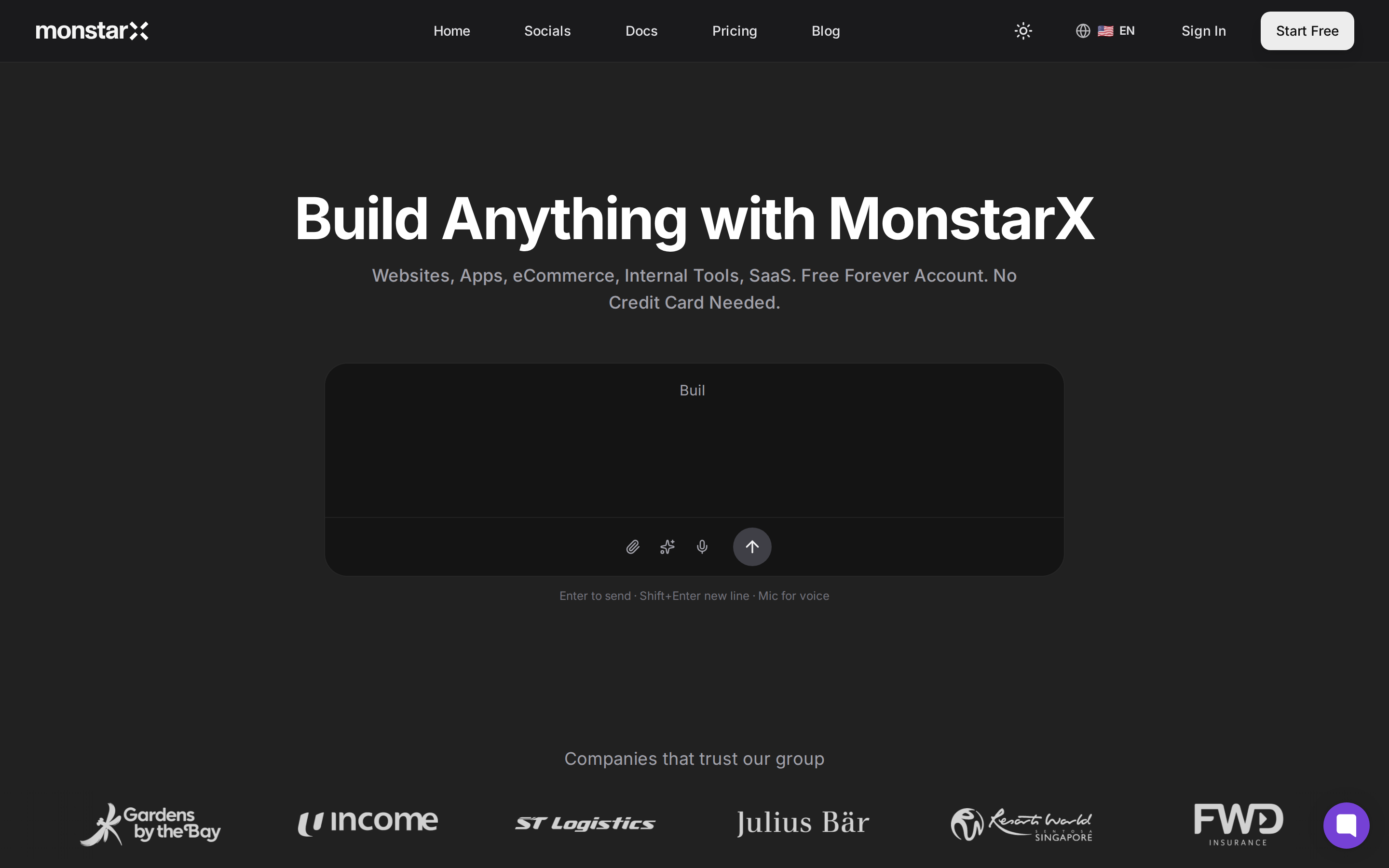
MonstarX is the AI app builder I reach for when a prototype needs to become a real product. While Lovable focuses on speed to a first web version, MonstarX is built for the full journey: a confirmed architecture before any code is written, a phased build with checkpoints, external service integrations without manual configuration, and native iOS and Android output from the same prompt.
Key advantages over Lovable:
| Feature | Lovable | MonstarX |
|---|---|---|
| Build model | Prompt-to-app, no pre-build confirmation | Scope selector + PRD before generation begins |
| Backend | Supabase-connected frontend | Full stack auto-generated: frontend, backend, DB schema, auth |
| Mobile output | Web only | Native iOS + Android from the same prompt |
| External integrations | Limited, manual | Stripe, Twilio, Resend, Google Maps, Google Analytics, Anthropic and OpenAI APIs via Connectors tab |
| Edit stability | Inconsistent on structural changes | Phased builds with checkpoint approval at each stage |
| Free plan | 5 credits/day (30/month) | 3 credits/day with daily reset |
| Starting paid | $25/month | $13/month (Solo) |
What makes MonstarX different:
The scope selector is where every MonstarX build starts. Before anything is generated, you answer a set of specific questions: is this a marketing site, a full application with user accounts, does it need an admin dashboard? Each answer shapes the architecture. After scope is set, MonstarX generates a Product Requirements Document you can review before approving the build.
The build then runs in phases, each one completing and reporting before the next begins. If something is wrong at phase two, you catch it before phases three, four, and five are stacked on top of it. That checkpoint model is what makes editing feel safe on a product that is already in progress, versus the prompt purgatory that Lovable's single-loop editing creates on complex changes.
The Connectors tab is the other major differentiator. Stripe for payments, Twilio for SMS, Resend for email, Google Maps for location features, Google Analytics for tracking, Anthropic and OpenAI APIs for AI features. You add the API key. The connection is handled. No separate integration project, no documentation reading.
And for any product where the primary user experience is on a phone, MonstarX is the only major AI builder that outputs native iOS and Android apps from the same prompt that builds the web application. Not a web view in a mobile shell. Actual native mobile output.
Practical use cases:
- SaaS products that need authentication, user management, and payment processing from day one
- Consumer apps where mobile is the primary surface
- Founders building without a developer who need the full stack handled automatically
- Products that need to connect to Stripe, Twilio, or AI APIs without manual backend work
Pricing: Free (3 credits/day, daily reset, no credit card required), Solo at $13/month, Pro at $20/month, Teams at $59/month
For a walkthrough of what a complete MonstarX build looks like from scope to deployed product, the 10-minute app build post covers the full process.
Try it: monstarx.com
2. Bolt.new -- Best for Full-Stack React Apps With Code Control
Bolt.new is an AI-powered browser-based IDE that generates full-stack web applications using React, Node.js, and modern frameworks. It is a strong choice for developers who want more code control than Lovable offers.
Key strengths:
- Real-time code preview with hot reload
- Full-stack code generation covering both frontend and backend
- NPM package installation support
- GitHub integration for version control
Best for: Developers who want to stay close to the code, React and Node.js projects, teams that want to export and continue development in a standard engineering workflow.
Limitations compared to MonstarX:
- No scope confirmation or PRD before generation
- No built-in connectors for external services
- No native mobile output
- Requires more technical comfort than a fully no-code tool
Pricing: Free tier available, paid plans from $20/month
3. v0 by Vercel -- Best for UI Component Generation
v0 by Vercel is Vercel's AI tool for generating React components and landing pages using Shadcn UI and Tailwind CSS. It excels at the frontend layer specifically.
Key strengths:
- Fast, clean UI component generation
- Production-ready code output
- Seamless Vercel deployment integration
- Good for landing pages and marketing sites that do not need complex backend logic
Best for: Front-end developers who need quick UI prototypes, teams building marketing sites, anyone who wants to accelerate component creation without changing their existing deployment workflow.
Limitations:
- UI-only, no backend logic generation
- Limited to React and Next.js ecosystem
- No mobile output
- Not suitable for applications with complex data requirements
Pricing: Free tier with usage limits, paid plans from $20/month
4. Rosebud AI -- Best for Web Apps With Built-In AI Chat Features
Rosebud AI is an AI no-code platform for building web apps and interactive experiences with built-in AI chat and unlimited image generation.
Key strengths:
- Unlimited AI-generated images with background removal included
- Built-in AI chat features without needing external API keys
- Active community with remix and sharing features
- Basic multiplayer support for interactive projects
Best for: Non-developers building interactive web applications, projects that benefit from built-in AI chat, creators who want to remix and build on existing community projects.
Comparison to MonstarX:
Rosebud is web-focused and suited for lighter interactive experiences. MonstarX covers more ground: full-stack generation with a structured build process, native mobile output, and a Connectors tab that includes external services Rosebud does not support natively.
Pricing: Free tier with weekly prompt refresh, pro plans from $20/month
5. Cursor AI -- Best for AI-Assisted Coding in an Existing Workflow
Cursor is an AI-powered code editor built on VS Code that provides intelligent code suggestions and generation within your development environment.
Key strengths:
- Deep integration with existing codebases
- Multi-file editing with AI context across the project
- Terminal command generation
- Works across languages and frameworks
Best for: Experienced developers who want AI assistance within their current workflow, teams with existing codebases that need AI-augmented development speed.
Limitations:
- Requires coding knowledge, not a no-code tool
- No asset generation, no mobile output, no built-in integrations
- Full access requires a paid subscription
Pricing: Free tier limited, paid plans from $20/month
6. Create.xyz -- Best for Simple Landing Pages
Create.xyz is a straightforward AI website builder focused on creating single-page sites and landing pages quickly.
Key strengths:
- Simple, minimal interface
- Fast deployment
- Low barrier for non-technical users
Best for: Absolute beginners who need a basic landing page or portfolio site and do not need any complex application functionality.
Limitations:
- Very limited functionality compared to any of the other platforms on this list
- No complex web app support
- No mobile output
- Limited customization
Pricing: Free tier available, paid plans from $15/month
Comparison Table: Lovable vs. Alternatives
| Platform | Best For | Backend | Mobile Output | External Integrations | Pricing (Starting) |
|---|---|---|---|---|---|
| MonstarX | Full-stack web + native mobile, production-ready products | Full stack auto-generated | Native iOS + Android | Stripe, Twilio, Resend, Google Maps, AI APIs via Connectors tab | $13/mo (Solo) |
| Lovable | Web app prototypes, early validation | Supabase | Web only | Limited, manual | $25/mo |
| Bolt.new | Full-stack React apps, developer control | Node.js + React | Web only | Manual | $20/mo |
| v0 by Vercel | UI components, landing pages | None | Web only | None | $20/mo |
| Rosebud AI | Web apps with AI chat features | Basic | Web only | None (AI chat built-in) | $20/mo |
| Cursor AI | AI-assisted coding for developers | Any (manual) | Manual | Manual | $20/mo |
| Create.xyz | Simple landing pages | None | Web only | None | $15/mo |
How to Choose the Right Lovable Alternative
Choose MonstarX if you need:
- Full-stack generation including backend, database schema, and auth in one session
- Native iOS and Android output from the same build
- External service integrations like Stripe, Twilio, Resend, or AI APIs without manual configuration
- A phased build process that lets you approve each stage before the next begins
- Daily credit resets rather than a monthly pool
Choose Bolt.new if you need:
- Full-stack web development with code access
- React and Node.js specific features
- More direct code control than Lovable or MonstarX
Choose v0 by Vercel if you need:
- Fast UI component generation
- Landing pages and marketing sites in the React ecosystem
- Vercel deployment already in your workflow
Choose Rosebud AI if you need:
- Web apps with built-in AI chat
- Unlimited AI image generation included
- A community-oriented platform with remix features
Choose Cursor AI if you:
- Already code and want AI assistance within your IDE
- Work with existing codebases across multiple languages
- Need multi-file context-aware suggestions
Stick with Lovable if:
- Web-only prototyping speed is the single priority
- Your backend requirements fit entirely within Supabase
- You need the GitHub export workflow specifically
Real-World Use Case Comparison
Scenario 1: Building a Consumer App With Mobile and Payments
A founder wants to build a consumer subscription app that works on web and mobile with Stripe payments and email notifications.
With Lovable: The prototype comes together quickly on web, but there is no mobile output, Stripe requires separate integration, and email transactional logic needs to be wired manually. Each of those is a separate project after the Lovable build ends.
With MonstarX:
- Scope selector: full application with authentication and admin dashboard
- PRD confirms the subscription model, user account flow, and notification requirements
- Build phases generate the full stack including auth, DB schema, and backend logic
- Connectors tab: add Stripe API key, Resend API key, done
- Native iOS and Android apps generated alongside the web application
The full-stack build walkthrough covers what this process looks like on a real product.
Scenario 2: Building a Landing Page for a Product Launch
A marketing team needs a fast, polished landing page for a new feature release with no complex backend.
With Lovable: Works well, generates a polished landing page quickly, deploys to Netlify.
With v0 by Vercel: Also works well, faster component iteration, deploys directly to Vercel. Better choice if the team already lives in the Vercel ecosystem.
With MonstarX: Capable but designed for more complex builds. For a pure landing page with no application logic, v0 or Lovable are faster to the result.
The right tool depends on whether the landing page is standalone or the entry point to a product that needs to be built next.
Common Questions About Lovable Alternatives
Is MonstarX better than Lovable? For building a complete product you intend to ship to real users on web and mobile, yes. MonstarX adds native iOS and Android output, a scope selector and PRD before building to prevent misbuilt foundations, full-stack auto-generation including backend logic rather than just a Supabase-connected frontend, and phased builds that prevent the prompt purgatory loop. For the fastest path to a web-only prototype for validation purposes, Lovable is faster to that first version.
Can I use these platforms without knowing how to code? MonstarX, Lovable, Rosebud, v0, and Create.xyz are all designed for non-developers. Bolt.new works best with some technical comfort. Cursor is a developer tool that requires coding knowledge.
Which platform is best for SaaS products? MonstarX. The scope selector distinguishes between a marketing site and a full SaaS application with multi-user accounts, authentication, and an admin dashboard. The full stack including DB schema and auth flow is generated automatically. The 7 best Lovable alternatives post covers SaaS-specific use cases in more detail.
Do any platforms support mobile app development? MonstarX is the only major AI builder on this list that generates native iOS and Android apps from the same build that produces the web application. The mobile AI builder comparison covers the full landscape.
What is prompt purgatory and which platforms avoid it? Prompt purgatory is what happens when you try to change one specific thing in a prompt-first editor, the AI regenerates more than you intended, something breaks, you prompt again, and you are now thirty minutes deep in a loop fixing a five-minute problem. Lovable's single-prompt editing loop is prone to this on larger structural changes. MonstarX avoids it through phased builds with checkpoint approval at each stage, so you catch issues before they compound.
How does MonstarX pricing compare to Lovable? MonstarX's Solo plan starts at $13/month versus Lovable's Pro at $25/month. MonstarX's free plan gives 3 credits per day with a daily reset. Lovable's free plan gives 5 credits per day that count toward a 30-per-month cap. For sustained building over several weeks, the daily reset is considerably more predictable. Full pricing is at monstarx.com/pricing.
Can I export my code from MonstarX? Yes. MonstarX generates the full application including backend code. You own what is built. For teams that want to continue development outside the platform, the code is available for export.
Conclusion: Which Lovable Alternative Should You Choose?
Lovable is a capable tool for early web prototyping, and it earned its place in the market. But for the majority of founders building products they intend to ship to real users, the gaps in backend depth, mobile output, and external integrations become blockers before the product reaches production.
Here is the short version:
- For a complete product: web + mobile + backend + integrations -- MonstarX
- For full-stack React with code access -- Bolt.new
- For UI components and landing pages -- v0 by Vercel
- For web apps with built-in AI chat -- Rosebud AI
- For AI-assisted coding in your existing workflow -- Cursor
- For a simple landing page with no complexity -- Create.xyz
MonstarX is the right starting point if you are building a product that needs to actually work: a backend generated automatically alongside the frontend, Stripe and Twilio connected without manual wiring, native iOS and Android apps from the same build, and a phased process that keeps the architecture correct as the product grows.
The free plan includes 3 credits per day with a daily reset and no credit card required. Start at monstarx.com.
Related Reading
- Building an Application in Less Than 10 Minutes Without Code
- How I Built a Full-Stack AI App With a Real Database and No Engineering Team
- 7 Best Lovable Alternatives in 2026 Compared by Use Case
- 12 Best Lovable Alternatives for Different Use Cases 2026
- Best Bolt AI Alternatives for Building Your Mobile App in 2026
- MonstarX vs Lovable: Which AI Builder Actually Gets You to Production?
- 6 Best Rocket.new Alternatives in 2026
- The Future of Software Will Be Built by Non-Engineers
Sources: seeles.ai, lovable.dev, bolt.new, v0.dev, cursor.com, monstarx.com/pricing