
MonstarX vs Lovable: Which AI Builder Actually Gets You to Production?

By Kristine Ling · July 14, 2026 · 8 min read
First, credit where it is due. Lovable is one of the most genuinely exciting tools in the AI builder space. Its prompt-to-prototype loop is fast, the community is large, and the visual editing layer makes UI iteration feel approachable for non-developers. It raised a $330M Series B at a $6.6B valuation and reached $200M ARR for a reason.
But if you are here reading a comparison, you are probably asking a more specific question than "which one is popular." You want to know which one is right for what you are trying to build. Keep reading!
Quick Verdict
Lovable is the right choice when your priority is speed to a working web prototype. The iteration loop is tight, the output looks polished immediately, and the platform is well-supported.
MonstarX is the right choice when you need a complete product, not just a prototype. That means a backend generated automatically alongside the frontend, native iOS and Android output from the same prompt, external service integrations without manual configuration, and a phased build process that keeps edits stable as the product grows.
| Lovable | MonstarX | |
|---|---|---|
| Best for | Fast AI-generated web prototypes and early validation | Complete products: full-stack web + native mobile, production-ready |
| Build model | Prompt-first generation, visual tools for UI polish | Scope selector + PRD before build, phased generation with checkpoints |
| Frontend control | AI-generated layouts, visual editing and prompt refinement | Scope-confirmed first output, stable editing across phases |
| Backend | Supabase integration | Full stack auto-generated: frontend, backend, DB schema, auth |
| Mobile output | Web only | Native iOS + Android from the same prompt |
| External integrations | Limited | Stripe, Twilio, Resend, Google Maps, AI APIs via Connectors tab |
| Edit stability | Inconsistent on larger structural changes | Stable, phase-controlled |
| Free plan | 5 daily credits (30/month) | 3 credits/day, daily reset |
| Paid starting price | $25/month | $13/month (Solo) |
| Best when | You want to validate an idea quickly with a web prototype | You want to ship a full product including mobile without a dev team |
Different Tools for Different Stages
The most useful frame for this comparison is not which tool is better. It is which problem each tool is designed to solve.
Lovable is designed for the first stage: getting from idea to something you can show someone as fast as possible. The AI generates a frontend, connects it to Supabase for basic data persistence, and the visual editor lets you refine the UI without going back through the prompt loop every time. For validation, for demos, for proving an idea works well enough to justify going further, Lovable is genuinely good at that stage.
MonstarX is designed for the next stage: building a product that actually works, for real users, with real integrations, on web and on mobile. The scope selector, the PRD, the phased build with checkpoints, and the Connectors tab are all features that address what happens after the prototype phase. They exist specifically because the gap between "prototype that looks right" and "product that works" is where most AI builder projects stall.
Build Faster With a Plan, Not Just a Prompt
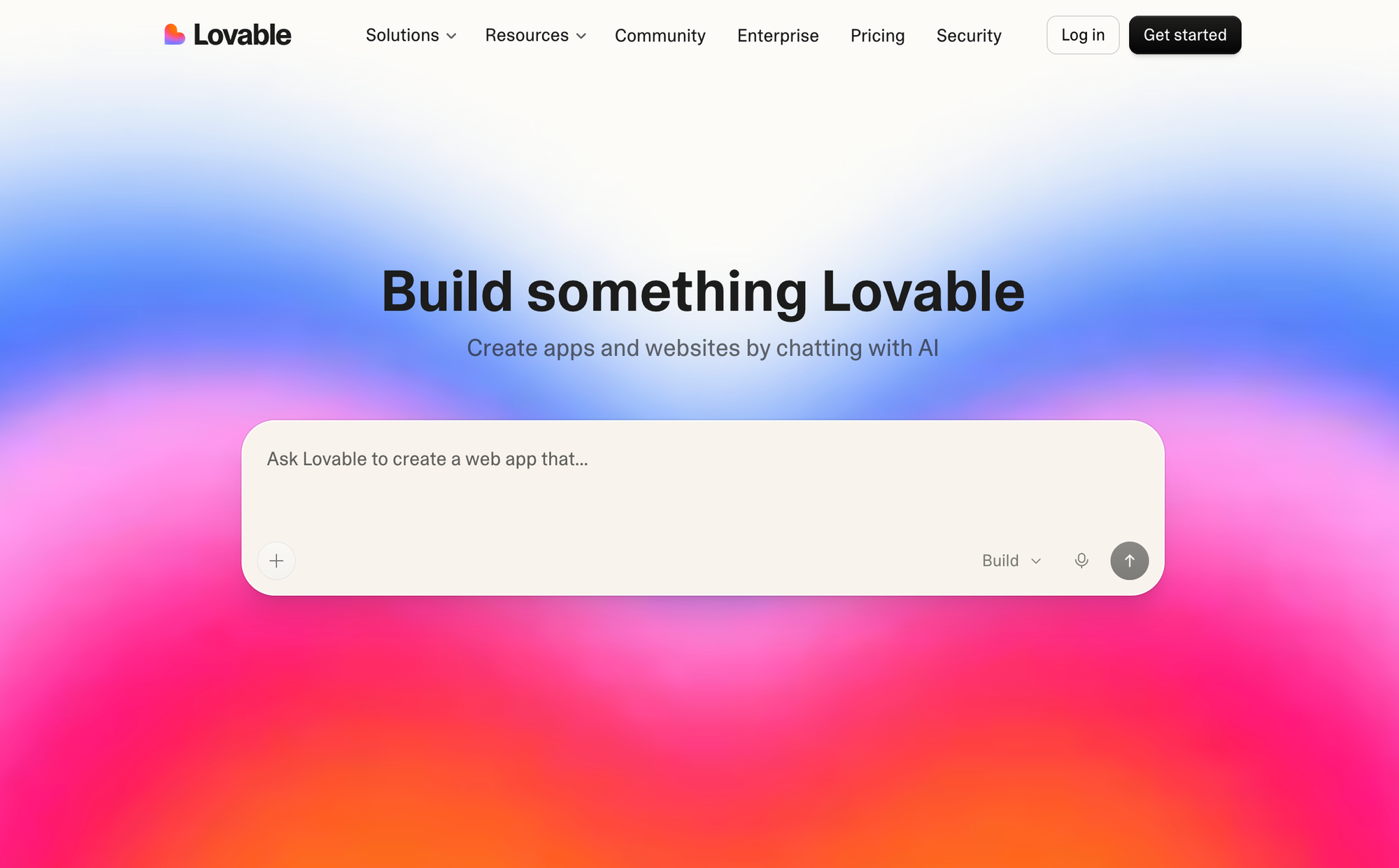
With Lovable, you describe your idea and the AI starts generating. That speed is one of its core advantages and it is real. Within minutes you have something that looks like a product.
The limitation becomes apparent when you want to change something structural. Lovable's editing model is prompt-first: you describe the change you want, the AI regenerates, and you review the result. For early iteration, this loop is satisfying. For precise targeted changes on a product that is already working, it is unpredictable. A prompt to update one component can regenerate parts of the application you did not intend to touch.
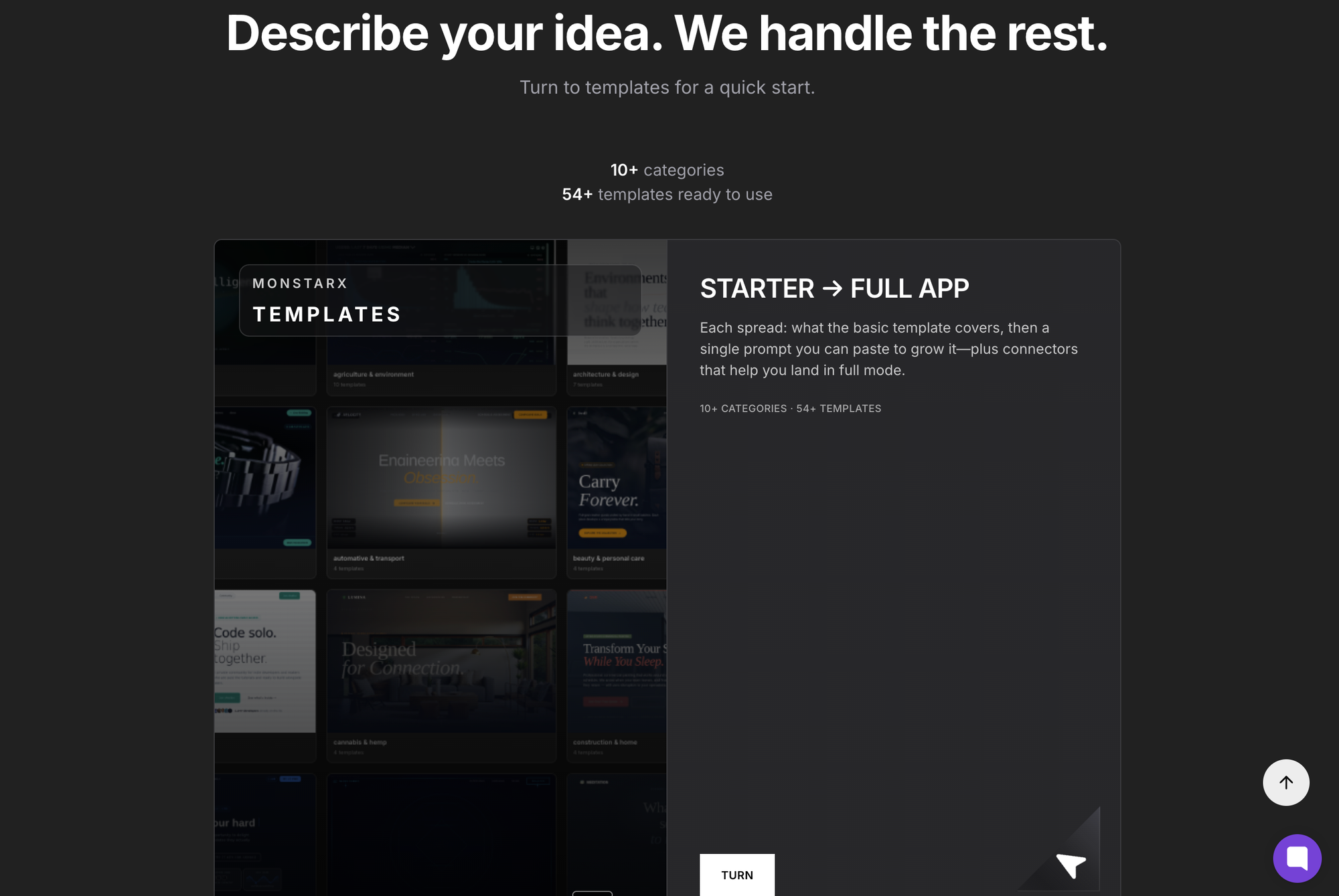
MonstarX adds two steps before generation that change the quality of what gets built. The scope selector asks what you are building: a marketing site, a full application with authentication, something that needs an admin dashboard? That decision determines the architecture before a single line is written. After scope, MonstarX generates a Product Requirements Document you can review and edit before approving the build.
The build then runs in phases. Each phase completes, reports what it built, and waits for you to approve before the next one begins. If something is wrong at phase two, you catch it before phases three, four, and five are stacked on top. The result is a first version that is more likely to be architecturally correct and a build process where edits stay stable because each phase is locked before the next begins.
For a walkthrough of what this looks like on a real project, the 10-minute app build post covers the full process from scope to published product.
Backend Depth: Beyond Supabase
Both MonstarX and Lovable generate a backend alongside the frontend. The depth of that backend is where they diverge.
Lovable's backend is Supabase. It connects the AI-generated frontend to Supabase for data storage and authentication, which handles the majority of basic web app use cases. If your application's data requirements fit within Supabase's model and you do not need external services, Lovable's backend is enough.
MonstarX generates the complete application: frontend, backend logic, database schema, and authentication flow in one session. You do not configure the backend separately after the frontend looks right. It is part of the first output.
More importantly, the Connectors tab gives you everything your product needs to talk to the real world:
- Stripe for payments
- Twilio for SMS
- Resend for email
- Google Maps for location
- Google Analytics for tracking
- Anthropic and OpenAI APIs for AI features
You add the API key. The connection is handled. No documentation, no manual wiring, no separate integration project for every service your product needs to use.
The practical difference: a Lovable prototype becomes a product when you add these integrations separately. A MonstarX build comes with them.
Mobile Output: The Gap That Cannot Be Closed With a Prompt
This section is brief because the answer is direct.
Lovable builds web applications. If your product needs to run as a native app on iOS or Android, Lovable does not solve that problem.
MonstarX generates native iOS and Android apps from the same prompt that builds the web application. Not a web view wrapped in a mobile shell. Actual native mobile output.
For any founder building a consumer product where the primary user experience is on a phone, this is a fundamental difference in what each tool can produce. The best mobile AI builder comparison covers the full landscape, and MonstarX is the only major AI builder that handles native mobile output natively alongside web.
Design Control: Who Makes the Decisions
Lovable's AI generates layouts that look polished out of the box. The visual editing layer lets you fine-tune UI elements without re-entering the prompt loop, which is one of Lovable's strongest practical features. For teams where visual quality matters from the first version, Lovable's output requires less cleanup than most alternatives.
The tradeoff is structural control. When the change you need is architectural rather than visual, prompt-first editing is unpredictable. You describe the change, the AI regenerates, and you may get a result that is close but requires multiple prompt iterations to land on exactly what you wanted. WeWeb describes this as "prompt purgatory" and it is an accurate name for a real experience.
MonstarX's approach trades some of that early visual speed for architectural correctness. The scope selection and PRD step take a few extra minutes before the build starts. What you get from those minutes is a first version that reflects the product you described rather than an approximation the AI improvised. The phased build with checkpoints means the architecture stays correct as the product grows.
Hosting and Getting to Production
Lovable generates code you can push to GitHub and deploy via platforms like Vercel or Netlify. The bi-directional GitHub sync is useful for teams that want to graduate a Lovable prototype into a standard engineering workflow. You handle your own environments, CI, and deployment configuration.
MonstarX builds the complete product including the backend in one session. You are not setting up a separate deployment pipeline for the backend you configured separately, because the backend was part of the build. For a non-technical founder who wants the path from prompt to live product to be as short as possible, MonstarX removes the steps that typically require technical knowledge to complete.
Pricing: What You Actually Pay
| Plan | Lovable | MonstarX |
|---|---|---|
| Free | 5 credits/day (30/month) | 3 credits/day, daily reset |
| Starting paid | $25/month (Pro, 100 credits) | $13/month (Solo) |
| Team/Business | $50/month | $59/month (Teams) |
| Mobile output | Not included | Included on all plans |
MonstarX's daily reset model is worth highlighting specifically. Lovable's 30 monthly credits can be exhausted in a few active build sessions. MonstarX's 3 credits per day reset every 24 hours. For a founder building something real over several weeks, which is the actual timeline for most products, the daily reset is considerably more predictable than a monthly pool you can drain in one afternoon.
Final Verdict: Which One?
Use Lovable if: you want to validate an idea as fast as possible, you are building a web-only product, your backend requirements fit within Supabase, and you have the technical comfort to handle integrations and deployment separately.
Use MonstarX if: you need web and mobile from the same build, your product needs to connect to external services like Stripe or Twilio, you want the backend generated automatically without separate configuration, and you want a build process that stays stable as the product grows.
For most founders building a product they intend to ship to real users, MonstarX covers more of the journey. For quick validation and demos where only the web experience matters, Lovable is faster to that first version.
The full-stack app build walkthrough shows what building a complete product in MonstarX looks like from start to finish. And if you are still deciding between several tools beyond just these two, the 7 best Lovable alternatives guide covers the full landscape.
Frequently Asked Questions
What is the main difference between MonstarX and Lovable? Four things: MonstarX generates native iOS and Android apps alongside the web application, Lovable does not. MonstarX uses a scope selector and PRD before building to prevent misbuilt foundations. MonstarX generates the full stack automatically including backend logic, not just a Supabase-connected frontend. And MonstarX builds in phases with checkpoints, so editing one part does not break others.
Is MonstarX better than Lovable? For building a complete product you intend to ship to real users on web and mobile, yes. For the fastest path to a web-only prototype to validate an idea, Lovable is faster to that first version. The right answer depends on whether you are validating or building.
Can I use MonstarX without any coding knowledge? Yes. The scope selector, PRD generation, phased builds, and Connectors tab are all designed for people who are not developers. You describe the product, confirm the system understood it, and approve each build phase before it continues. No backend decisions. No manual configuration. No API documentation.
Does MonstarX have a free plan? Yes. Three credits per day with a daily reset, no credit card required. The paid Solo plan starts at $13 per month, which is the lowest starting price among the major full-stack AI builders.
What integrations does MonstarX support that Lovable does not? The MonstarX Connectors tab includes Stripe, Twilio, Resend, Google Maps, Google Analytics, and AI APIs from Anthropic and OpenAI. These are available through an API-key-and-connect workflow with no manual wiring required. Lovable's integration options are more limited and typically require separate configuration outside the platform.
Can MonstarX build mobile apps? Yes. MonstarX generates native iOS and Android apps from the same prompt that builds the web application. This is the only major AI builder in 2026 that provides native mobile output alongside web from a single build.
When should I use Lovable instead of MonstarX? When speed to a first web prototype is the only priority. Lovable's prompt-to-running-app loop is faster to the first screenshot, and its visual editing layer is polished. If you are showing an investor a concept tomorrow and mobile is not part of it, Lovable gets you there faster. If you are building the product those investors would actually use, MonstarX is the better starting point.
Related Reading
- Building an Application in Less Than 10 Minutes Without Code
- How I Built a Full-Stack AI App With a Real Database and No Engineering Team
- 7 Best Lovable Alternatives in 2026 Compared by Use Case
- 12 Best Lovable Alternatives for Different Use Cases 2026
- 6 Best Lovable Alternatives in 2026: Features and Pricing Compared
- Best Bolt AI Alternatives for Building Your Mobile App in 2026
- MonstarX vs v0 by Vercel: Full-App Platform vs UI Generator
- The Future of Software Will Be Built by Non-Engineers